Storytelling in Video Editing
From Myths to Timelines for Digital Nomad Creators

You’re somewhere between places.
Maybe it’s a long bus crossing the Great Plains, a night train through Eastern Europe, or a ferry to the next island. Your backpack is under your seat, your laptop battery is at 63%, and your SD cards are full of moments that could become a story – if you cut them right.
As a digital nomad, you don’t just collect footage. You collect experiences: missed connections, unexpected friendships, quiet mornings, chaotic borders. The real difference between “nice clips” and content that actually moves people is simple:
You’re not just editing video. You’re telling a story.
And storytelling is much older than any camera or editing software we use today. Storytelling in video editing is the difference between a nice travel montage and a piece of content that actually stays with people.
What this article will help you do
- Use timeless myth structures to shape digital nomad video stories.
- Borrow techniques from speeches, movements and brand campaigns.
- Turn raw travel footage into narrative arcs your audience remembers.
- Apply concrete storytelling steps in your next edit – client or personal.
Why ancient myths still matter to your next video edit
Long before timelines and thumbnails, there were campfires and myths.
Greek mythology is one of the clearest examples: gods, heroes, betrayal, hubris, quests, failure, transformation. These stories survived thousands of years because they use universal patterns – archetypes and conflicts that still show up in modern films, series and campaigns.
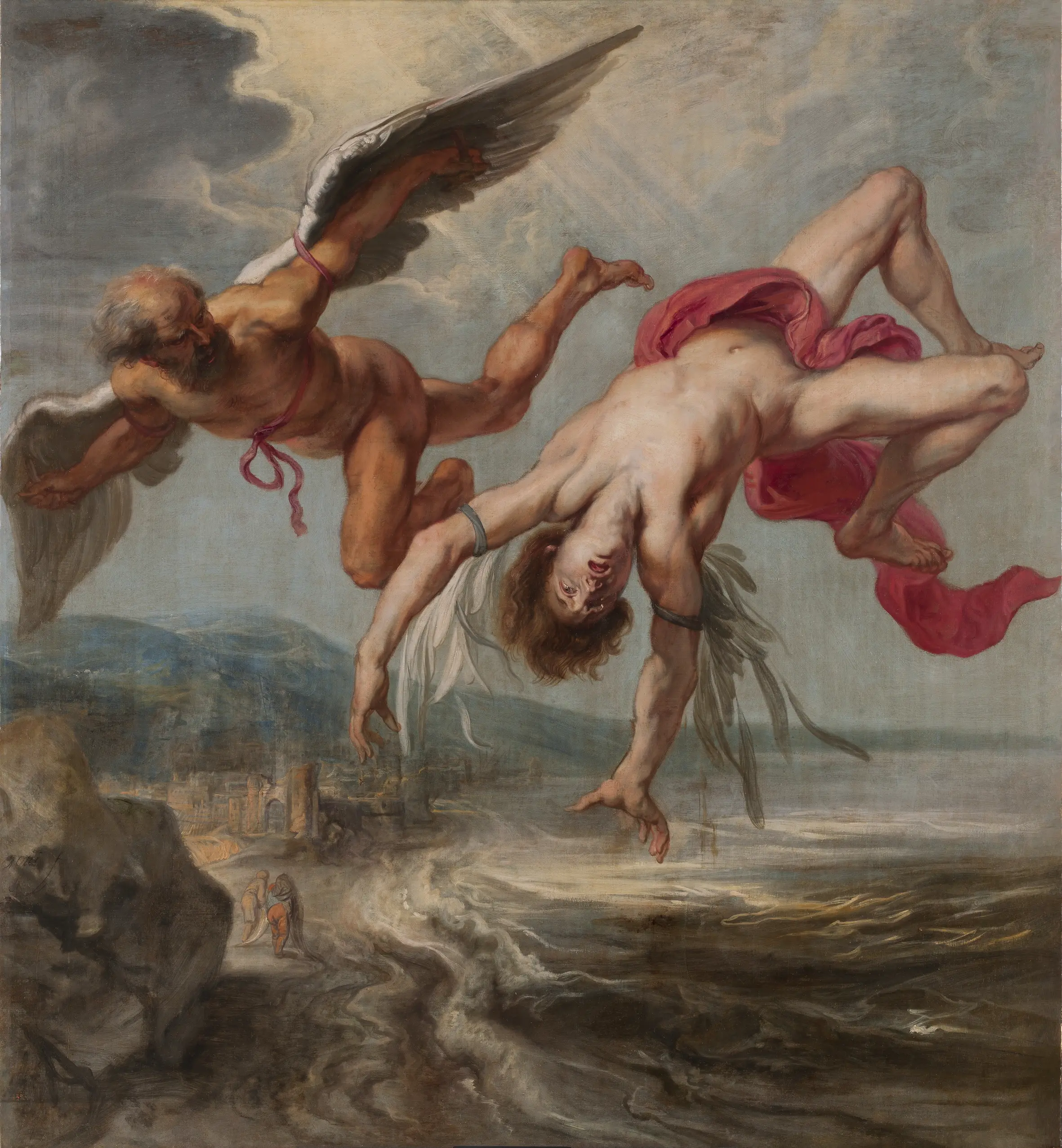
Take Icarus: the boy who flies too close to the sun, ignoring warnings, and falls. Painful, simple, unforgettable. Artists keep returning to this image – like in Peter Paul Rubens’ painting The Fall of Icarus – because it compresses a whole inner journey into one visual: ambition, arrogance, consequence.
What does that have to do with your travel vlog, your client’s brand video, or your YouTube tutorial?
Everything.
Myths use clear desires: the hero wants something badly.
They add obstacles: gods, monsters, inner doubts.
They show change: the character is not the same at the end.
That structure is the same one you use when you edit:
- Who is this video about?
- What do they want?
- What stands in their way?
- How are they different when it’s over?
If your edit answers these four questions, it starts to feel like a story – not a random highlight reel.
How stories change reality: from myths to movements
Storytelling isn’t just entertainment. It’s one of the tools humans use to shift what a society believes is possible or acceptable.
Two quick examples:
Martin Luther King Jr. and the architecture of a speech
On August 28, 1963, hundreds of thousands of people stood in front of the Lincoln Memorial in Washington, D.C. and listened to Martin Luther King Jr.’s “I Have a Dream” speech. The core isn’t a list of demands. It’s a carefully designed narrative.
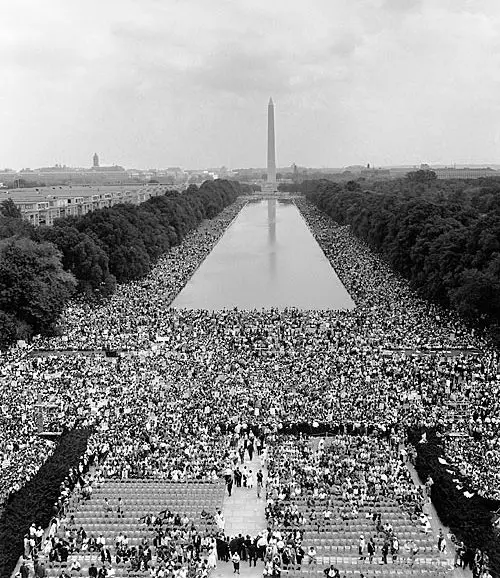
King uses repetition (“I have a dream…”, “Now is the time…”), metaphors (“the dark and desolate valley of segregation”), and allusions to the founding ideals of the United States to paint a vivid mental film for his listeners.
He doesn’t just inform. He invites people into a shared vision – a story of what the country could become.
#MeToo: collective storytelling in real time
Decades later, the #MeToo movement showed what happens when millions of individuals share personal stories in public. A single tweet by Alyssa Milano in 2017 triggered a wave of testimonies on social media; survivors used the hashtag to describe experiences of harassment and violence, often in just a few sentences.
These posts weren’t polished scripts. But taken together, they formed a collective narrative that:
- exposed how widespread the problem is
- turned private shame into public accountability
- pushed institutions and laws to respond
Different medium, same core mechanism: personal stories change what feels “normal”.
As a creator, that’s the same raw material you work with: real experiences, shaped into something that others can feel and understand.
What brands and campaigns can teach you about story beats
If you look at strong Super Bowl spots or high-end brand films, you’ll see myth and movement logic in 30–60 seconds.
One example: Amazon’s Alexa campaigns. In “Not Everything Makes the Cut” (2019), the team used celebrities and absurd Alexa-enabled gadgets (an Alexa dog collar ordering sausages, an Alexa hot tub firing people out with water pressure) to tell a mini-story about what Alexa shouldn’t be – and by contrast, what it is.
The spot works because it:
- builds a world with exaggerated rules
- gives each mini-scene a clear setup → punchline rhythm
- makes Alexa feel like a character, not just a feature
For you as a solo creator or small brand, the budget is different. But the logic is the same:
- Who or what is the “hero” in this video? (You, your client, your audience, a product, a cause.)
- What tiny “world” can we build around them in 30–90 seconds?
- What is the change, surprise or punchline at the end?
Once you think in story beats instead of “B-roll + music”, your edits get sharper – and easier to cut.
How YouTubers and creators use story to build loyal communities
Most successful YouTubers and travel creators don’t just post “Day 7 in X”.
They use simple but powerful storytelling patterns:
- Cold open: start with a problem, a question, a conflict. (“We missed the last ferry to the island.”)
- Flashback: then explain how you got there.
- Running motifs: a song, a sentence, a visual gag that keeps returning.
- Micro-cliffhangers: small questions at the end of a segment that pull viewers into the next one.
They also share parts of their inner story: doubts, mistakes, learning curves. That’s why viewers feel like they know them and stick around.
As a digital nomad editor, you can apply the same tools to client projects:
- A nonprofit film: follow one person’s day instead of listing all programs.
- A remote-work brand: tell a mini-hero’s journey of a person who switched from office to nomadic life.
- A SaaS or privacy-first tool: show a before → after transformation in a user’s life, not just a feature walkthrough.
Practical storytelling techniques for your next video edit
Let’s translate all that into concrete steps at the editing desk.you’re editing a video about crossing a windy plain in the Midwest. Instead of ‚clip 1: bus, clip 2: landscape, clip 3: coffee‘, treat it as a mini-quest: the goal is to reach the next town before nightfall. That gives every shot (weather, delays, tired faces, the first lights of the town) a narrative job.
1. Start with one person and one promise
Before you open your NLE, answer:
- Who is at the center of this video (even if they’re off-camera)?
- What transformation do we promise the viewer? (Feel inspired, understand something, take a next step.)
This becomes your guiding line. If a clip doesn’t serve that promise, it’s a candidate for the bin.
2. Sketch a simple three-act structure from your footage
Even documentary-style or travel content benefits from a loose three-act arc:
- Setup: where are we, who’s involved, what’s at stake?
- Confrontation: obstacles, tension, uncertainties, setbacks.
- Resolution: what changed, what did we learn, what’s next?
Practically:
- Lay your selects on the timeline roughly in this order.
- Identify 2–3 emotional peaks and cut around those – not around geography or strict chronology.
- Use your voice-over or on-screen text to make the arc explicit if needed.
3. Use recurring visual motifs like modern myths use symbols
Myths have recognisable symbols: wings, labyrinths, thunderbolts.
You can do something similar with:
- a specific transition (match cuts on the same movement)
- a recurring object (backpack, notebook, camera, coffee mug)
- a repeated framing (wide shot of your van, top-down view of your desk, skyline in the distance)
Every time this motif appears, it anchors your viewer and makes the video feel coherent – even when you jump in time and space.
4. Edit for emotional beats, not just pretty shots
As you refine the timeline:
- Ask yourself for each segment: What should the viewer feel here?
- Speed up when energy is high (quick cuts, music accents).
- Slow down on moments that need to land (longer shots, minimal music, clear voice).
The point isn’t to show every beautiful frame you shot. It’s to guide the emotional curve from first second to last.
5. Invite your viewer in as a participant
Remember the shift we saw with #MeToo: people don’t just consume stories, they join them.
You can do the same on a smaller scale by:
- asking questions directly to camera
- using on-screen prompts (“What would you have done here?”)
- leaving space for comments and stories in your description or end screen
The more your audience feels like co-travellers, not spectators, the stronger your content sticks.
Nomadic Filmworks: helping you turn roaming into story
At Nomadic Filmworks, this is exactly the intersection we live in:
- documentary-style, human stories
- digital nomad reality (laptops on the road, limited gear, real constraints)
- and a workflow that respects both creativity and privacy-first tech
If you want to move:
- from “I have a lot of raw travel footage”
- to “I tell stories that people remember – and that support my work and values”
…then storytelling is the core skill. The tools (DaVinci, Premiere, Resolve Fusion, AI assist) are just extensions of that.
We can help you:
- shape your existing footage into narrative-driven edits
- design content formats that fit your brand and your travel lifestyle
- and build a visual language that feels like you, not like a generic template
Let’s take the timeless logic of myths, the clarity of powerful speeches, the honesty of modern movements – and translate it into your next video.
Wherever you open your laptop next, your story doesn’t have to stay stuck on the SD card.